

Understanding the Fundamentals of Property Maintenance
We understand that managing a property, whether residential or commercial, represents a significant investment. Protecting this asset and ensuring its longevity, safety, and occupant satisfaction is paramount. Property maintenance is the cornerstone of this effort. It’s far more than just fixing things when they break; it’s about proactive care, strategic planning, and consistent upkeep.
In this extensive guide, we will explore the multifaceted world of property maintenance. We will delve into everything from safeguarding curb appeal and managing efficient cleanouts to mastering climate control, where being aware of potential Property HVAC repair costs can be crucial for budgeting. Join us as we uncover the different types of maintenance, essential services, key roles, and best practices for optimizing your property’s care.
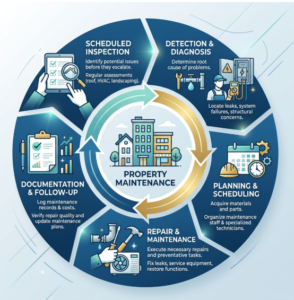
At its core, property maintenance encompasses all activities undertaken to preserve, restore, or improve a property’s condition and functionality. This includes both the structural integrity of buildings and the upkeep of surrounding grounds. For property owners, managers, and tenants alike, understanding and implementing effective maintenance strategies is not merely a convenience, but a necessity.
For owners, consistent maintenance protects and enhances property value, ensuring a strong return on investment. Neglect can lead to significant depreciation, costly emergency repairs, and potential legal liabilities. For property managers, robust maintenance protocols are crucial for operational efficiency, budget control, and maintaining a positive reputation. Proactive care can transform maintenance from a cost center into a profit center by extending asset lifespans and reducing turnover expenses. For tenants, well-maintained properties translate directly to safety, comfort, and satisfaction. A property’s condition significantly influences resident retention and attraction; indeed, statistics show that 78% of prospective residents consider a property management company’s online reviews—often reflecting maintenance quality—as the number one factor in their housing choice.
To truly grasp the scope of property maintenance, it’s helpful to distinguish it from related fields like facility and building maintenance. While these terms are often used interchangeably, they have distinct focuses:
Feature Property Maintenance Facility Maintenance Building Maintenance Primary Scope Tenant-occupied properties (residential, hospitality) and their grounds. Owner-occupied commercial or industrial facilities, encompassing all assets. Focuses solely on the physical structure of a building. Key Objective Ensure habitability, safety, tenant satisfaction, and preserve property value. Optimize operational efficiency, safety, and productivity for the occupants. Maintain structural integrity, safety, and appearance of the building. Activities Repairs, cleaning, groundskeeping, inspections, capital improvements, tenant request fulfillment. Asset management, preventative maintenance, space management, security, utilities, environmental compliance. Structural repairs, roof maintenance, HVAC systems, plumbing, electrical, exterior care. Focus Rental units, common areas, landscaping, amenities. All systems, equipment, and infrastructure within a facility. Walls, roof, foundation, windows, doors, core systems. Property maintenance, therefore, prioritizes the experience of those living or staying on the property, aiming for habitability, safety, and aesthetic appeal. It’s about delivering a seamless living or working experience, and with a dedicated approach to maintaining all aspects of a property, you can achieve truly Hassle-free property maintenance for everyone involved.
The Core Types of Property Maintenance

Understanding the different approaches to maintenance is key to developing an effective strategy. We categorize property maintenance into several core types, each serving a distinct purpose:
- Preventive Maintenance: This proactive approach involves scheduled tasks designed to prevent equipment failure and extend asset lifespan. Examples include routine HVAC filter changes, seasonal inspections of roofing and plumbing, and regular lubrication of mechanical parts. It’s about identifying and addressing potential issues before they escalate into costly repairs.
- Reactive Maintenance: Also known as corrective maintenance, this occurs when an asset or system has already failed and requires immediate repair to restore functionality. A burst pipe or a sudden HVAC breakdown are classic examples. While sometimes unavoidable, an over-reliance on reactive maintenance indicates a lack of preventive planning and can lead to higher costs and tenant dissatisfaction.
- Corrective Maintenance: Similar to reactive, but often refers to repairs that are not necessarily urgent but are needed to fix an existing fault or deterioration. It’s about restoring an asset to its original working condition after a defect has been identified. This could be repairing a leaky faucet that isn’t causing immediate damage but is inefficient.
- Condition-Based Monitoring: This advanced form of maintenance relies on real-time data and monitoring of asset conditions to determine when maintenance is needed. Sensors might track vibration, temperature, or other parameters to predict potential failures, allowing for maintenance to be scheduled precisely when required, optimizing resource allocation.
- Risk-Based Prioritization: In this approach, maintenance activities are prioritized based on the potential risks associated with asset failure. High-risk assets (e.g., those critical for safety or essential for operations) receive more frequent or thorough maintenance attention. This ensures that resources are allocated where they can have the greatest impact on safety and operational continuity.
- Emergency Response: This is a subset of reactive maintenance, specifically addressing critical failures that pose immediate threats to safety, property, or habitability. Think of power outages, severe water leaks, or structural damage. Having a well-defined emergency response plan is vital for minimizing damage and ensuring occupant well-being.
By strategically combining these types, with a strong emphasis on preventive and condition-based approaches, property managers can significantly reduce unexpected costs, improve asset reliability, and enhance overall property performance.
Essential Services: From Curb Appeal to Climate Control
A comprehensive property maintenance plan covers a vast array of services, spanning both the exterior and interior of a property. These services collectively contribute to curb appeal, functionality, safety, and tenant satisfaction.
Starting with the exterior, landscaping is fundamental. This includes routine lawn care, tree and shrub pruning, irrigation system checks, and seasonal planting. A well-maintained landscape not only enhances aesthetic appeal but also prevents issues like overgrown roots damaging foundations or poor drainage leading to water intrusion. Beyond greenery, the condition of hard surfaces is critical. Asphalt resealing is recommended every 2-3 years to protect parking lots and driveways from UV damage, weather erosion, and traffic wear, extending their lifespan. Similarly, parking lot striping should be refreshed annually to ensure clear markings for safety, efficient traffic flow, and ADA compliance. For properties in arid regions, specialized considerations come into play, where effective Desert property maintenance solutions might involve drought-resistant landscaping and unique irrigation strategies to conserve water while maintaining aesthetics.
Moving indoors, climate control systems, particularly HVAC units, are paramount for occupant comfort and health. It’s a well-known fact that nearly half of all HVAC service requests occur in the three months when summer arrives, highlighting the critical need for proactive maintenance. Regular inspections, filter replacements, and professional servicing prevent breakdowns, improve energy efficiency, and extend the life of these expensive systems. Ignoring these can lead to exorbitant repair bills, making it essential to factor in potential Property HVAC repair costs when budgeting.
Other vital interior services include ensuring plumbing integrity, which involves checking for leaks, clearing drains, and maintaining water heaters. Pest control is a continuous effort to prevent infestations that can damage property and create unhealthy living conditions. Janitorial services maintain cleanliness in common areas, contributing to a positive living or working environment. Regular checks and maintenance of appliances (refrigerators, stoves, laundry units) extend their operational life and prevent tenant inconvenience. Finally, critical structural elements like roof inspections should be conducted annually to identify potential leaks or damage, and gutter clearance is essential to prevent water accumulation that can lead to fascia damage, foundation issues, and ice dams in colder climates.
Strategic Management and the International Property Maintenance Code
Effective property maintenance isn’t just about performing tasks; it’s about strategic management guided by established standards. The International Property Maintenance Code (IPMC) plays a pivotal role here. The IPMC is a comprehensive model code that establishes minimum requirements for the maintenance of existing residential and non-residential structures and premises. It’s designed to ensure public health, safety, and welfare by setting benchmarks for safe and sanitary conditions.
Why does the IPMC matter? For property owners and managers, adherence to the IPMC is crucial for:
- Safety Compliance: It mandates standards for crucial safety elements like fire safety systems (smoke detectors, sprinklers, egress routes), electrical compliance (safe wiring, outlets, and fixtures), and the overall structural integrity of buildings (foundations, walls, roofs).
- Health and Habitability: The code dictates requirements for adequate light and ventilation, proper sanitation, and functional plumbing requirements (potable water, waste disposal).
- Mechanical Code Alignment: It ensures that heating, cooling, and other mechanical systems are maintained in safe and operational condition.
- Occupancy Limitations: The IPMC also addresses issues like overcrowding and sets standards for minimum space requirements per occupant, preventing unsafe living conditions.
Ignoring IPMC standards can lead to code violations, fines, legal action, and, most importantly, compromise the safety and well-being of occupants. Regular inspections and a proactive maintenance approach are essential to ensure continuous compliance.
Roles within the Property Maintenance Team
A well-oiled property maintenance operation relies on a diverse team with clearly defined roles and responsibilities.
- Maintenance Technicians: These are the frontline workers, responsible for executing a wide range of repairs and preventive tasks. Their duties might include plumbing fixes, minor electrical work, HVAC troubleshooting, painting, carpentry, and responding to tenant work orders. Their efficiency and skill directly impact tenant satisfaction.
- Maintenance Supervisor: This role oversees the maintenance technicians, schedules work orders, manages inventory, ensures quality control, and often acts as a liaison between the technicians and property management. They are crucial for optimizing workflow and resource allocation.
- Property Manager: While not directly performing maintenance, the property manager is responsible for strategic oversight. They set maintenance budgets, approve major repairs, handle tenant relations regarding maintenance issues, and decide on in-house versus outsourced services. They ensure maintenance aligns with overall property goals.
- Janitorial Staff: Focused on cleanliness, janitorial teams maintain common areas, hallways, lobbies, and sometimes individual units during turnovers. Their work is vital for presenting a clean and inviting environment.
- Specialized Contractors: For tasks requiring specific licenses or advanced skills (e.g., major electrical overhauls, complex HVAC repairs, roofing, large-scale landscaping projects), specialized contractors are brought in. They provide expertise that in-house teams may not possess.
- External Vendors: This broader category includes companies providing services like pest control, waste management, security, and sometimes even general handyman services. They fill gaps in the in-house team’s capabilities or capacity.
The collaboration between these roles is essential for a holistic and effective property maintenance program.
Optimizing Operations: Staffing, Software, and Budgeting
Achieving efficiency and cost-effectiveness in property maintenance requires a strategic approach to staffing, leveraging technology, and smart budgeting.
Software Solutions: The modern property maintenance landscape is increasingly reliant on technology. Property maintenance software or Computerized Maintenance Management Systems (CMMS) tools are invaluable for streamlining operations. These platforms can:
- Automate work order creation, assignment, and tracking.
- Manage preventive maintenance schedules and alerts.
- Track inventory of parts and supplies.
- Facilitate communication between tenants, technicians, and managers.
- Provide data analytics on maintenance costs, response times, and asset performance.
By digitizing and automating workflows, CMMS tools significantly improve efficiency, reduce administrative burdens, and provide actionable insights for decision-making.
Staffing Decisions: A critical decision for property managers is whether to rely on in-house maintenance staff or outsourcing to vendors.
- In-house staff offers quicker response times for routine issues, a deeper understanding of the property’s specific needs, and greater control over quality. To be profitable, internal technicians should aim for a 75% utilization rate or more, meaning 75% of their working hours are spent on billable or productive maintenance tasks. Tracking billable hours helps assess the efficiency and cost-effectiveness of an in-house team.
- Outsourcing is often more suitable for specialized tasks (e.g., elevator maintenance, fire suppression systems), infrequent services (e.g., major roof repairs), or when in-house capacity is overwhelmed. It can reduce overhead costs associated with salaries, benefits, and equipment, but may come with higher per-task costs and less direct control. The best approach often involves a hybrid model, using in-house staff for daily tasks and outsourcing for specialized or large-scale projects.
Budgeting: Accurate budgeting is paramount. Common rules of thumb include:
- The 1% Rule: Budget 1% of the property’s value annually for maintenance. For a property valued at $500,000, this would be $5,000 per year.
- The 50% Rule: For rental properties, maintenance costs might consume around 50% of the gross monthly rent.
- The $1 per Square Foot Rule: Allocate $1 per square foot annually for maintenance.
These are general guidelines and actual costs can vary based on property age, condition, location, and type.
Professional Development: Investing in the skills of maintenance professionals is also key. Certifications like the Certificate for Apartment Maintenance Technicians (CAMT) and Certified Apartment Manager (CAMT) or Certified Manager of Community Associations (CMCA) provide valuable credentials and enhance expertise. Salaries for property maintenance roles vary: a property maintenance technician might earn $30-40k per year, a maintenance supervisor $40-70k, and a property manager $50-80k, depending on experience and location.
Best Practices for Property Maintenance Efficiency
To maximize efficiency and effectiveness, we recommend implementing the following best practices:
- Preventive Checklists: Develop comprehensive seasonal and monthly checklists for all critical systems and areas. This ensures no task is overlooked and helps anticipate issues.
- Essential Seasonal Maintenance Tasks:
- Spring: HVAC system tune-up, gutter cleaning, roof inspection, exterior painting touch-ups, landscaping preparation.
- Summer: AC unit checks, pest control, pool maintenance, asphalt crack sealing, irrigation system review.
- Fall: Furnace inspection, raking leaves, winterizing irrigation, checking weather stripping, chimney cleaning.
- Winter: Snow removal planning, pipe insulation checks, heating system maintenance, emergency kit preparation.
- Resident Communication: Establish clear channels for maintenance requests and provide timely updates on repair status. Proactive communication significantly boosts tenant satisfaction.
- Vendor Verification: Thoroughly vet all external contractors and vendors. Confirm licenses, insurance, and references. Maintain strong relationships with reliable service providers.
- Satisfaction Follow-ups: After a maintenance task is completed, follow up with residents to ensure their satisfaction. This helps identify any lingering issues and demonstrates a commitment to their well-being.
- Unit Turn Speed: Streamline the maintenance process during tenant turnovers to minimize vacancy periods. This includes efficient cleaning, repairs, and inspections to get units ready for new occupants quickly.
- Digital Documentation: Keep detailed digital records of all maintenance activities, including dates, costs, parts used, and before-and-after photos. This documentation is invaluable for budgeting, warranty claims, and proving due diligence.
- Proactive Inspections: Conduct regular, proactive inspections of the entire property, not just in response to issues. This allows for early detection of problems and planned, rather than reactive, repairs.
Frequently Asked Questions about Property Maintenance
What is the difference between property maintenance and facility maintenance?
Property maintenance primarily focuses on preserving and restoring tenant-occupied residential or hospitality properties and their surrounding grounds to ensure habitability, safety, and tenant satisfaction. Facility maintenance, on the other hand, typically applies to owner-occupied commercial or industrial facilities, encompassing the maintenance of all assets, systems, and infrastructure to optimize operational efficiency and productivity.
How does the International Property Maintenance Code (IPMC) affect landlords?
The IPMC sets minimum standards for the maintenance of existing buildings and premises to ensure public health, safety, and welfare. For landlords, this means they are legally obligated to maintain their properties to these standards, covering aspects like structural integrity, fire safety, electrical systems, plumbing, mechanical systems, light, and ventilation. Non-compliance can lead to fines, legal action, and a compromised living environment for tenants.
Is it more cost-effective to hire in-house staff or outsource to vendors?
The most cost-effective approach often depends on the property’s size, type, and specific needs. In-house staff can offer quicker response times, deeper property knowledge, and greater control, especially if their utilization rate is high (75% or more). However, they come with overhead costs like salaries and benefits. Outsourcing can be more cost-effective for specialized tasks, infrequent repairs, or when in-house capacity is limited, as it reduces direct employment costs but may incur higher per-service fees. A hybrid model, combining in-house staff for routine tasks and outsourcing for specialized needs, often strikes the best balance.
Conclusion
Property maintenance is a dynamic and essential aspect of successful property ownership and management. By embracing a comprehensive approach that integrates preventive care, strategic planning, and efficient execution, we can ensure the asset preservation and operational efficiency of any property. This commitment to upkeep directly translates into long-term profitability, robust safety compliance, and elevated resident satisfaction. From the curb appeal of meticulously maintained landscaping to the comfortable climate controlled by well-serviced HVAC systems, every maintenance effort contributes to a property’s overall value and appeal. Through strategic upkeep, we not only protect our investments but also create thriving, safe, and desirable environments for all occupants.