
South Florida is known for beautiful waterfront living, warm weather, boating, fishing, and easy access to the water. But anyone who owns or manages waterfront property in the region understands one important thing. Water levels do not stay the same.
Tides rise and fall. Heavy rain can push water higher. Seasonal storms can change conditions quickly. King tides can flood low-lying areas. Even normal weather patterns can make the waterline shift throughout the year. Because of these changes, choosing the right dock matters.
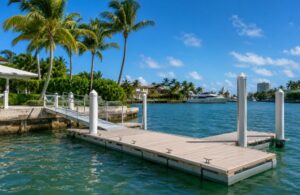
This is one reason floating docks are a smart choice for South Florida. Unlike fixed docks, which stay at one set height, floating docks move with the water. They rise when the water rises and lower when the water drops. That simple movement makes them practical, safer, and easier to use in areas where water levels often change.
Floating Docks Adjust With The Water
The biggest benefit of a floating dock is that it moves with changing water levels. A fixed dock can become too high above the water during low tide or too close to the water during high tide. This can make it harder to board a boat, launch a kayak, or step safely from the dock to the vessel.
A floating dock stays closer to the water surface. This creates a more consistent height for daily use. Whether the tide is high or low, the dock remains easier to access.
In South Florida, this matters because waterfront conditions can change fast. A dock that works well in the morning should still be useful later in the day. Floating docks help make that possible.
Better Access For Boats And Watercraft
Boat owners need safe and easy access to the water. When a dock is too high or too low, boarding can become awkward. People may have to step down too far, climb up from a boat, or stretch across a gap. This increases the chance of slipping or falling.
Floating docks reduce that problem because they stay near the boat’s level. This makes loading supplies, helping passengers, and getting on or off the boat much easier.
They are also useful for kayaks, paddleboards, personal watercraft, and small boats. Since these vessels sit low in the water, a floating dock often provides better access than a fixed dock. For families, rental properties, marinas, and recreational spaces, this can make water activities more comfortable and safer.
Useful During Tides And Seasonal Water Changes
South Florida deals with regular tide movement, but it also faces seasonal water changes. Rainy seasons can bring higher water. Dry seasons can lower water levels. Storm events can create sudden shifts.
A fixed dock may work well during one season but become less convenient during another. Floating docks are more adaptable. They do not depend on one perfect water height. Instead, they respond to the water’s movement.
This flexibility is especially helpful for properties along canals, bays, lakes, rivers, and coastal areas. When the water changes, the dock remains functional.
Safer For Everyday Use
Safety is one of the main reasons people choose floating docks. A stable walking surface close to the water can make boating and waterfront activities easier for children, older adults, guests, and pets.
A floating dock can reduce steep steps, awkward gaps, and difficult boarding angles. It can also make it easier to carry coolers, fishing gear, boat supplies, or water sports equipment.
Of course, any dock still needs proper design and maintenance. The surface should provide good traction. The dock should be anchored correctly. Ladders, cleats, bumpers, and railings may be useful depending on the property. But when designed well, a floating dock can make waterfront access more predictable and user-friendly.
Strong Option For Storm-Prone Areas
South Florida weather can be intense. Heavy rain, strong wind, and tropical storms can test any waterfront structure. Floating docks are often designed to move with water instead of resisting every change from a fixed position.
That movement can be helpful during changing conditions. A dock that rises with higher water may avoid some of the access problems fixed docks face during flooding or storm surge conditions. The system still needs proper anchoring and a design suited to local conditions, but the floating structure itself offers practical flexibility.
Storm preparation is still important. Dock owners should secure loose items, inspect hardware, and follow local safety guidance before major weather events. A floating dock is not storm-proof, but it can be a smart part of a waterfront setup in areas where water movement is common.
Easier To Expand Or Adjust
Many floating docks are modular, meaning they are built in sections. This allows property owners to adjust the layout over time. A homeowner may start with a small platform and add more space later. A commercial property may expand docking areas as demand grows.
This flexibility is useful in South Florida, where waterfront needs can change. A property owner may add a larger boat, more watercraft, or extra recreational space. A business may need more slips, launch points, or guest access.
Instead of starting from scratch, modular floating dock sections can often be reconfigured or expanded. This makes them a practical long-term option.
Lower Impact On Some Waterfront Areas
Floating docks can also be a good option where minimizing disturbance is important. Since they float on the water, they may require less permanent structural work than some traditional dock systems. This depends on the site, anchoring method, local rules, and environmental conditions.
In sensitive waterfront areas, design choices matter. The dock should allow water flow, reduce unnecessary shading where possible, and follow permitting requirements. A properly planned floating dock can support waterfront use while keeping the surrounding area in mind.
Practical For Homes And Businesses
Floating docks are not only for private homes. They are also useful for marinas, waterfront restaurants, resorts, rental properties, parks, kayak launches, and commercial waterfront spaces.
For homeowners, they provide easy access to boats and water activities. For businesses, they help create a better experience for customers, guests, and staff. A dock that adjusts with the water can reduce daily access problems and make the waterfront area more reliable.
That reliability is important in South Florida, where the water is part of everyday life for many properties.
Final Thoughts
Floating docks are ideal for South Florida’s changing water levels because they adjust with the water, improve access, and support safer daily use. They work well with tides, seasonal water changes, and many waterfront activities.
For residential properties, they make boating, kayaking, swimming, and relaxing by the water more convenient. For commercial properties, they provide flexible access that can support growth and regular use.
Waterfront conditions will always change. A floating dock is built to change with them. That is what makes it such a practical choice for South Florida.
This post was written by a professional at Supreme Marine Floating Docks. Supreme Marine Floating Docks is dedicated to providing top-quality floating docks and marine accessories that combine durability, innovation, and superior performance. While we are a new brand, our team brings over 50 years of combined industry experience, making us a trusted name in the marine world. We are passionate about designing and delivering products that meet the highest standards, ensuring reliability and longevity in all marine environments. Whether for residential, commercial, or recreational use, our docks are crafted with precision and care, setting a new benchmark in the industry. At Supreme Marine, we aren’t just floating dock builders Palm Beach—we create lasting solutions.